Digital Capabilities and Academic Practice
Why Generic "Digital Skills" Approaches Fail
Too often, institutions approach digital capability as if it's transferable across contexts. A generic "introduction to online teaching" workshop assumes what works in engineering transfers to creative arts, or that techniques for teaching postgraduates suit first-year undergraduates equally.
This fundamentally misunderstands how teachers develop expertise. Digital capability isn't acquired through learning universal techniques it develops through understanding how technology affords or constrains specific pedagogical approaches within particular disciplinary contexts. A historian teaching critical analysis of sources online faces fundamentally different challenges than a physicist teaching lab-based inquiry, even though both might use the same VLE.
My doctoral research explored how communities of practice enable teachers to develop this situated expertise. The finding: transformation happens when educators can connect technology choices to pedagogical purpose within their own disciplinary practice, supported by colleagues navigating similar challenges.
TPACK as Framework for Situated Competences
The TPACK framework Technological Pedagogical Content Knowledge provides structure for understanding this complexity. It positions digital capability not as separate "tech skills" but as the intersection of three knowledge domains:
Technology knowledge (understanding tools and their affordances)
Pedagogical knowledge (understanding how learning happens)
Content knowledge (disciplinary expertise and ways of knowing)
Effective teaching with technology happens at the intersections: knowing which technologies support which pedagogical approaches for particular content in specific contexts.
My work with the TPACK Special Interest Group has focused on developing toolkits and frameworks that help educators identify their own situated competences rather than imposing external standards. This includes recent presentations examining how we support formal teacher education in digital contexts moving beyond compliance toward partnership and criticality.
Building Institutional Capability, Not Just Individual Skills
Through leading co-leading UCISA's Digital Capabilities Survey, I see sector-wide patterns in how institutions approach educator development. The most successful approaches share characteristics:
They build communities of practice where educators develop capability through peer learning and shared experimentation, not isolated training sessions.
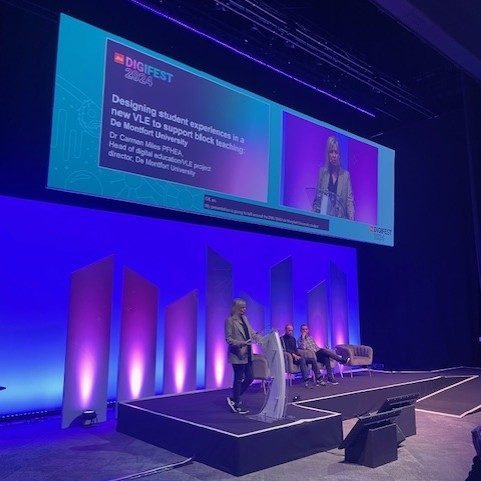
They position academic development centrally as ongoing support, not one-off interventions. At DMU our approach to VLE transformation prioritised creating sustainable support structures over rushing implementation.
They use appreciative inquiry to build on existing strengths rather than positioning educators as deficient. My work explores how this strengths-based approach supports integration of technology and pedagogy in practice.
They recognise capability develops over time through cycles of experimentation, reflection, and refinement not through completing training modules.
What Concerns Me About Current Approaches
In sector discussions, I increasingly see digital capability reduced to checklists and competency frameworks that treat it as fixed, measurable, and universal.
The assumption that capability is individual rather than social. Educators don't develop digital capability alone they develop it through communities where practice is shared, questioned, and refined.
The focus on tools rather than pedagogical purpose. Professional development that teaches "how to use Brightspace" without addressing "when and why to use specific Brightspace features for particular learning outcomes" builds surface compliance, not capability.
The treatment of digital as separate from "normal" teaching. Digital capability isn't an add-on to pedagogical expertise it's increasingly inseparable from effective teaching in contexts where most students experience some portion of their learning digitally.
The failure to address power and equity. Who defines what counts as "digital capability"? Whose pedagogical traditions and disciplinary practices are centered in frameworks? Whose ways of teaching are positioned as needing "upskilling"?
Digital Capability in the Age of AI
Generative AI complicates these questions further. What does digital capability mean when AI can generate teaching materials, provide feedback, create assessments?
Through my parallel work on AI and TPACK, I'm exploring how AI reshapes the competences educators need. The answer isn't "AI skills" as additional capability it's rethinking how technology knowledge, pedagogical knowledge, and content knowledge intersect when AI actively participates in teaching rather than simply supporting it.
This work connects directly to my role leading UCISA's Digital Capabilities Survey, where emerging questions about AI literacies are reshaping how UK institutions think about educator development.
Key Insights from Practice
As part of UCISA Digital Capabilities group I'm seeing sector-wide how institutions approach educator development. Combined with my research using TPACK framework and work leading academic development at DMU, several themes emerge about what enables sustainable digital capability.
Communities of practice matter more than training programs. Educators develop expertise through peer learning and shared experimentation within disciplinary contexts, not through generic skills workshops.
Sustainable capability requires institutional commitment to ongoing support, not one-off interventions. The most successful approaches position academic development as continuous partnership, not remedial training.
Where This Work Continues
Current questions I'm exploring through UCISA leadership and TPACK research include:
How do we develop digital capabilities that genuinely serve diverse pedagogical traditions and disciplinary practices, rather than imposing dominant models?
What does "digital capability" mean when AI can perform many tasks we've treated as requiring teacher expertise?
How do institutions build communities where educators develop capability through practice, rather than compliance through training?
If you're navigating digital capability development whether through institutional strategy, academic development, or research I'd welcome the conversation.
Presentations & Publications
Conference Presentations:
🎤 Formal Teacher Education in the Digital University: Beyond Compliance, Toward Partnership and Criticality SITE Interactive, September 2025
🎤 Developing a TPACK-Based Toolkit for Teacher Competences SITE Annual Conference, Florida, March 2025
🎤 Appreciative Inquiry to Facilitate Integration of Technology and Pedagogy University of Wolverhampton Researchers Conference, 2020
Research:
📄 The Use of TPACK to Support Communities of Practice SITE Conference, 2022
📄 Facilitating Pedagogical Change in Online Learning in Higher Education through Professional Development Professional Doctorate (EdD), University of Wolverhampton, 2021 Full thesis